
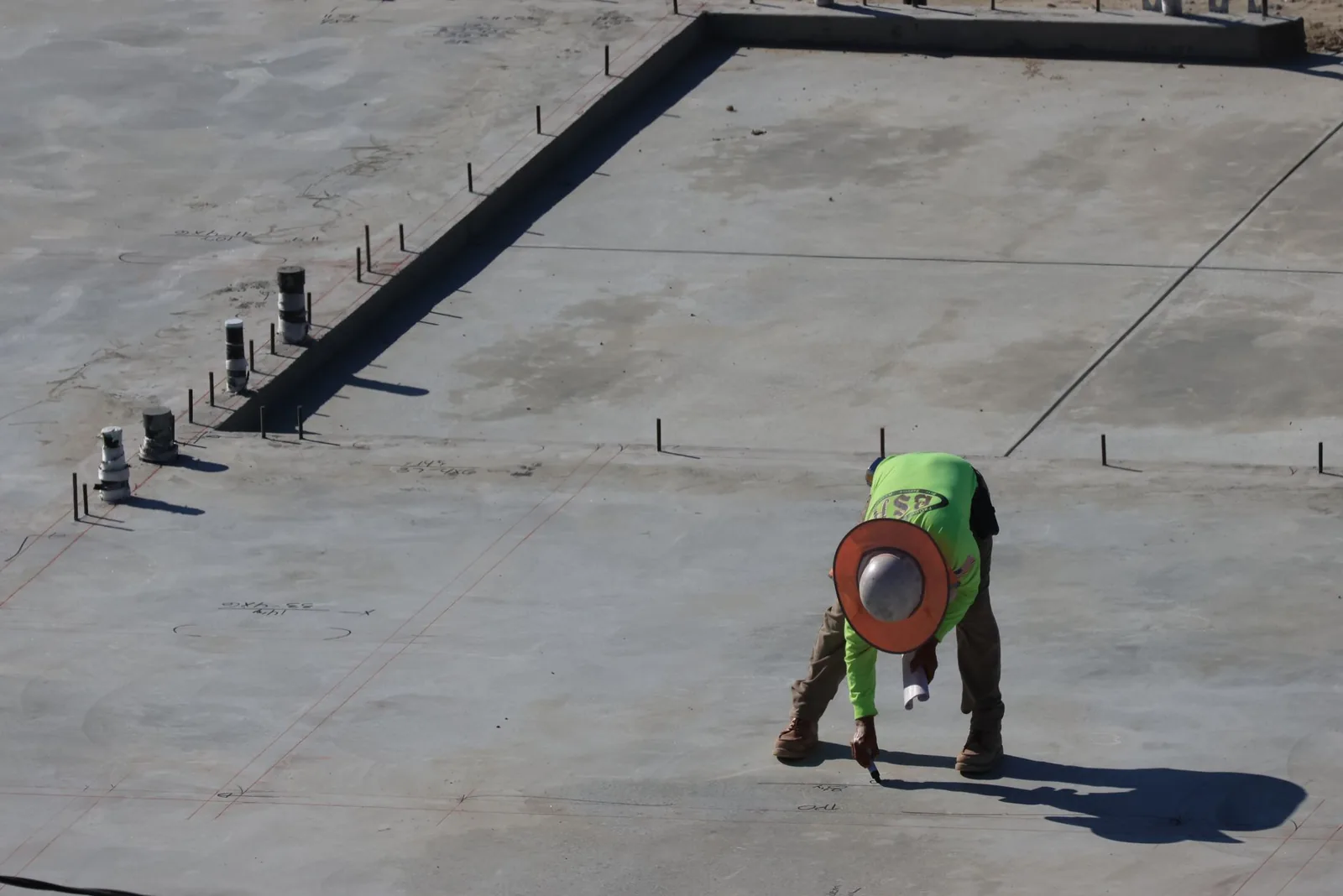
How Much Should a Concrete Slab Cost? A Real Pricing Breakdown
If you are planning a driveway, patio, garage floor, or shed pad, the first number you want is the one that answers this: how much should a concrete slab cost? For most residential projects, an installed concrete slab runs $4 to $8 per square foot, with a typical national average around $6 per square foot. A standard 24-by-24-foot driveway slab (576 square feet) lands somewhere between $2,300 and $4,600, and a small 10-by-10-foot patio or shed pad usually costs $600 to $1,200.
Those are the headline numbers, but the real answer depends on four things: the size of the slab, its thickness, the finish you choose, and where you live. Below, I break down each one using prices contractors actually charge, so you can estimate your own job with confidence instead of relying on a generic square-foot multiplier.
What Drives the Cost of a Concrete Slab?
Concrete pricing is easy to misread because the raw material is cheap while the labor around it is not. The bagged concrete you see at Lowe’s for a few dollars mixes out to maybe $0.10 per square foot of material at 4 inches thick. The installed price is many times higher because you are paying for site prep, forms, reinforcement, finishing, and the crew’s time.
The four biggest cost levers are:
- Size and shape. Bigger slabs cost more in total but less per square foot, because setup and cleanup are spread across more area. Odd shapes with many corners add formwork and cutting time.
- Thickness. A 4-inch slab is the standard for patios and walkways. Driveways that carry vehicles are typically 4 to 6 inches, and the extra 2 inches adds roughly 50% more concrete by volume.
- Finish. A broom finish is cheapest. Stamped, stained, or exposed-aggregate finishes add $2 to $8 per square foot on top of the base price.
- Site conditions. Sloped ground, poor drainage, tree roots, or inaccessible backyards drive up excavation and preparation costs fast.
How Much Should a Concrete Slab Cost by Project Type?
The same square-foot price can produce very different totals depending on what the slab is for. Here is what homeowners realistically pay for the most common projects:
| Project | Typical Size | Cost per Sq Ft | Total Installed Cost |
|---|---|---|---|
| Patio slab | 288 sq ft (12×24) | $4–$8 | $1,150–$2,300 |
| Driveway slab | 576 sq ft (24×24) | $4–$8 | $2,300–$4,600 |
| Garage floor | 400 sq ft (20×20) | $4–$7 | $1,600–$2,800 |
| Shed or AC pad | 100 sq ft (10×10) | $5–$10 | $500–$1,000 |
| Walkway | 120 sq ft (3×40) | $6–$12 | $720–$1,440 |
Small slabs carry a higher per-square-foot price because the crew still has to show up, set forms, and finish the surface whether it is 100 or 1,000 square feet. Below roughly 150 square feet, expect a minimum job charge in the $500 to $1,000 range regardless of size.

Thickness and Reinforcement: Where the Money Hides
Concrete is sold by the cubic yard, and most residential bags or ready-mix orders assume a 4-inch slab. A cubic yard covers about 81 square feet at 4 inches thick. Move to 6 inches and that same yard covers only 54 square feet, which is why thicker driveways cost noticeably more.
4-inch slabs are fine for patios, walkways, and shed floors that will never see vehicle traffic. 6-inch slabs are the standard for driveways that hold cars, trucks, or an RV, and they usually include a stronger mix (3,500 psi or higher) than a patio mix.
Reinforcement adds to the bill but prevents the hairline cracks that make a cheap slab look bad within two years. Options, from lowest to highest cost:
- No reinforcement — acceptable for small, low-traffic pads but risky for anything load-bearing.
- Wire mesh — an inexpensive rolled grid that holds a slab together if it does crack.
- Rebar grid — required for driveways and garage floors in many cold-climate areas; adds $0.50 to $1.00 per square foot.
- Fiber-reinforced mix — poly fibers mixed into the concrete, a modest upcharge that reduces surface cracking.
Skipping reinforcement to save $300 on a driveway is a false economy. A properly rebar-reinforced 6-inch driveway is the difference between a slab that lasts 40 years and one that spiderwebs in three.
Labor, Prep, and Add-Ons That Change the Quote
Material is only part of it. Concrete labor typically runs $2 to $3 per square foot, and site preparation can match or exceed it on a difficult lot. Before you compare quotes, understand what “installed” includes.
Excavation and grading. A flat, already-level site is the cheapest to build on. If the crew has to remove sod, dig out 4 to 6 inches of soil, haul it away, and lay a compacted gravel base, expect $1 to $3 per square foot in prep work. Heavy clay or rocky soil pushes this higher.
Concrete delivery. Ready-mix trucks have a minimum load (often 4 to 6 yards), so small jobs may pay a short-load fee. If a truck cannot reach the pour site, pumping concrete adds $150 to $250 per hour.
Sub-base and drainage. A 4-inch compacted gravel base under a driveway improves drainage and prevents heaving. Budget $1 to $2 per square foot for a proper base on driveways.
Finishes, if you want them beyond broom:
- Stamped concrete: $3 to $8 per square foot
- Stained or colored concrete: $2 to $5 per square foot
- Exposed aggregate: $2 to $4 per square foot
- Smooth trowel (interior-like) finish: $1 to $2 per square foot
A Real-World Example: Budgeting a 24×24 Driveway
Let me put the pieces together for a typical 576-square-foot driveway in a mid-cost market. This is the kind of breakdown you should ask any contractor to spell out the same way:
- 6 inches of concrete at 3,500 psi: about 10.7 cubic yards, roughly $1,400 delivered
- Excavation and grading: $800
- Compacted gravel base: $700
- Rebar reinforcement: $600
- Forming and pouring labor: $1,400
- Broom finish: included
That totals roughly $4,900, or about $8.50 per square foot, before any permits or upgrades. The same driveway at 4 inches with wire mesh instead of rebar could come in under $4,000. The spread between a budget quote and a premium quote on identical dimensions is completely normal — which is why you get at least three written estimates.

How Much Should a Concrete Slab Cost by Region?
Location is one of the biggest variables, and it is driven by labor rates and cement prices more than anything else. As a general rule:
- South and Midwest (TX, FL, OH, GA): $4 to $6 per square foot. Lower labor costs and easy access to materials keep prices down.
- Northeast and West Coast (NY, CA, WA): $6 to $10 per square foot, sometimes more in major metros.
- Cold-climate areas: $6 to $9 per square foot, because frost heave demands deeper bases and heavier reinforcement.
Get local numbers rather than trusting a national average. A concrete contractor in Dallas and one in Seattle can quote the same 500-square-foot patio $1,500 apart for the exact same plan.
Ways to Keep the Cost Down Without Regretting It
The cheapest concrete job is rarely the best one, but there are legitimate ways to save that do not sacrifice durability:
- Pour during the off-season. Late fall and early spring are slower for concrete crews, and discounts of 5–10% are common when they want to keep a crew busy.
- Bundle the work. If a contractor already has forms, tools, and a crew on-site, adding a walkway or a small side pad to a driveway job is much cheaper than scheduling it separately.
- Standardize the finish. A broom finish is durable, slip-resistant, and included in the base price. Stamped and stained finishes are where the budget balloons.
- Prep the site yourself. Clearing sod, moving furniture, and trimming branches are tasks a homeowner can do to shave prep hours off the bill — but leave digging and grading to the pros.
One place not to cut corners is the thickness and base. For driveways specifically, a 6-inch slab over a compacted gravel base is the minimum most contractors recommend for anything carrying regular vehicle traffic. If you are weighing a full replacement of an aging driveway, the pricing math in our guide to driveway replacement cost per square foot walks through what a tear-out adds to the total.
For current benchmarks and deeper how-to detail, the team at This Old House keeps regularly updated reference guides worth bookmarking.
Frequently Asked Questions
How much should a concrete slab cost per square foot on average?
Most homeowners pay between $4 and $8 per square foot for an installed concrete slab, with $6 per square foot as a reasonable national midpoint. Small slabs run higher per square foot because fixed setup costs are spread over less area.
Is a 4-inch slab thick enough for a driveway?
No. A 4-inch slab is fine for patios and walkways, but a driveway that carries cars should be at least 5 to 6 inches thick with reinforcement. The modest extra concrete is far cheaper than replacing a cracking slab later.
How long does a concrete slab take before I can use it?
Concrete reaches roughly 70% of its strength in seven days and full strength in about 28 days. You can walk on it within 24 to 48 hours, but keep vehicles off a new driveway for at least seven days.
Do I need a permit to pour a concrete slab?
In most areas, yes for driveways and any slab over a certain size, because they affect drainage and property lines. Your contractor usually handles the permit, at a cost of $50 to $200, but check with your local building department.
Are concrete or asphalt driveways cheaper?
Asphalt usually costs less up front at $2 to $5 per square foot versus $4 to $8 for concrete, but concrete lasts roughly twice as long and needs less maintenance. For a side-by-side cost breakdown over a 20-year span, see our concrete vs. asphalt driveway cost comparison.
The Bottom Line
So how much should a concrete slab cost? For a typical residential pour, plan on $4 to $8 per square foot installed, with most people landing between $2,300 and $4,600 for a standard driveway and $1,150 to $2,300 for a patio. The single best way to get a fair price is to obtain three itemized quotes that break out prep, thickness, reinforcement, and finish separately — then compare them line by line rather than by the bottom number alone.
If the slab is part of a larger driveway project, our guide to how much making a driveway costs covers excavation, permits, and finishing from the ground up. And if you already have concrete that is cracking, spalling, or settling, the numbers in driveway repair cost per square foot will tell you whether to patch or replace. Get the quotes, check the references, and pour the thicker slab. You will thank yourself a decade from now.


