
How Much Does a 20×20 Slab of Concrete Cost? (2026 Pricing Guide)
A 20×20 concrete slab gives you 400 square feet of solid, flat surface — enough for a two-car garage floor, a generous patio, a shed foundation, or a small section of driveway. It’s one of the most common pours homeowners order, and the price is more predictable than most outdoor projects.
So how much does a 20×20 slab of concrete cost? For a standard 4-inch-thick slab, most homeowners pay between $2,400 and $5,500 installed, with a national average around $3,800. At the low end, a basic patio slab with minimal site prep can come in under $2,000. At the high end, a reinforced 6-inch slab with a finish, grading, and difficult access can push past $7,000.
The spread exists because two jobs with identical dimensions can have very different needs. Here’s exactly where your money goes and what moves the final number.
What a 20×20 Concrete Slab Costs in 2026
A 20×20 slab is 400 square feet, so pricing almost always breaks down by the square foot. Installed prices for residential concrete currently run $6 to $12 per square foot for a standard 4-inch slab, which lands the finished project in the $2,400-to-$4,800 range. Add a thicker slab, reinforcement, or a decorative finish and the per-foot price climbs.
To picture the range, it helps to separate raw material from the finished job:
- Concrete only (materials): roughly $125 to $150 per cubic yard. A 4-inch slab over 400 square feet needs about 5 cubic yards, so the concrete itself costs $625 to $750.
- Bagged mix (DIY): about 115 to 120 bags of 80-lb Quikrete or Sakrete at $5 to $6 per bag, or $575 to $720 — but only if you already own or rent the mixer and tools.
- Gravel base and reinforcement: a 4-inch compacted gravel base plus a wire mesh or rebar grid adds $300 to $700 depending on access and soil.
- Labor and finishing: the largest line item, typically $1,500 to $3,000 for a crew to form, pour, screed, float, and finish 400 square feet.
Put it together and the “all-in” number for a basic slab sits around $3,500 to $4,500. That range is the realistic starting point for quotes, not a theoretical floor.
How the Price Breaks Down: Materials vs. Labor
Every concrete quote splits into two broad buckets, and knowing the ratio helps you judge whether a bid is fair.
Materials (roughly 35–45% of the job). Ready-mix concrete is the biggest single item, but you’ll also pay for form lumber, stakes, rebar or wire mesh, a plastic vapor barrier, and a gravel or crushed-stone base. Expect materials to total $1,200 to $2,000 for a 20×20 slab.
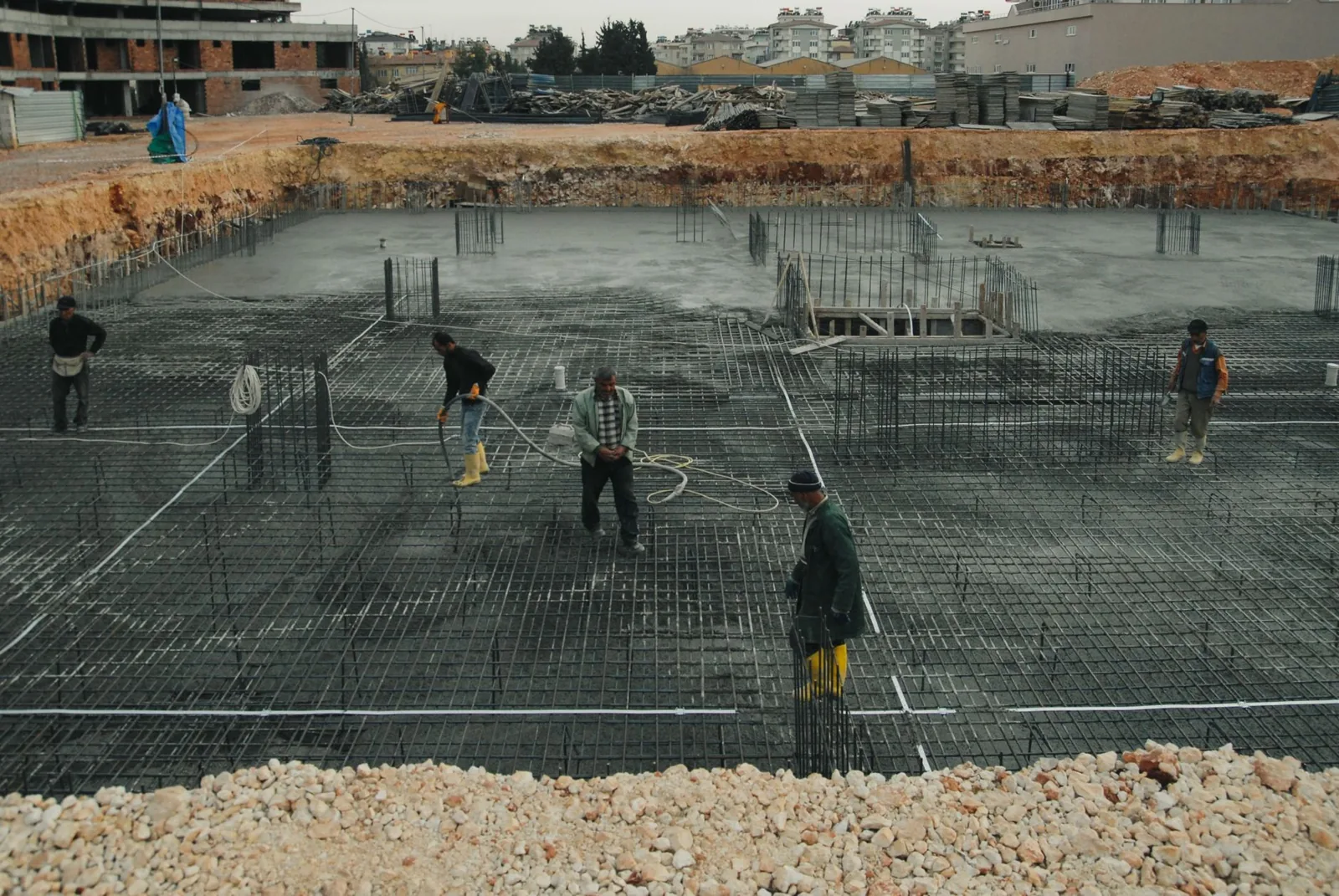
Labor and equipment (roughly 55–65% of the job). A concrete crew of three to four people will need most of a day for forming, pouring, finishing, and cleanup. Add the cost of the concrete truck, power trowel or screed rental, and any grading or excavation, and labor lands between $2,000 and $3,500.
Contractors in high-cost urban markets charge toward the top of every range, while trades in the Midwest and South often come in 20–30% lower. That regional gap alone can swing a 20×20 slab by $1,000 or more.
Factors That Move the Price Up or Down
Two neighbors with identical 20×20 dimensions rarely pay the same amount. These are the variables that actually move the number:
- Slab thickness. A 4-inch slab is fine for patios, sheds, and walkways. Garages, driveways, and anything carrying vehicle weight need 5 to 6 inches, which adds 25–50% more concrete and rebar.
- Soil and drainage. Level, compacted ground means a thin gravel base. Poorly draining clay or a slope means more excavation, more base material, and possibly a retaining edge.
- Access. If a concrete truck can back within reach of the pour, delivery is simple. A backyard slab the truck can’t reach requires pumping — a line item of $400 to $900 all by itself.
- Finish. A basic broom finish is cheap and slip-resistant. A smooth trowel finish, stamped patterns, color, or an exposed-aggregate surface can add $2 to $8 per square foot.
- Reinforcement. Wire mesh is the inexpensive standard. Rebar on a 16-inch grid costs more but prevents the cracking and settling that plague vehicle slabs.
- Removal and disposal. Tearing out an old slab and hauling it away adds $1 to $2 per square foot before a single yard of new concrete arrives.
The takeaway: quote the slab, not the price-per-foot headline. A $6-per-square-foot bid can easily beat a $5-per-square-foot bid if it includes better base prep and rebar.
20×20 Slab Cost by Project Type
The same 400 square feet serves different purposes, and each one carries its own thickness, finish, and code requirements.
| Factor | Patio / Walkway (4″) | Garage / Workshop (5–6″) | Driveway Section (6″) |
|---|---|---|---|
| Typical installed cost | $2,400 – $4,000 | $3,000 – $5,500 | $3,500 – $7,000 |
| Concrete needed | ~5 cu yd | ~6–7.5 cu yd | ~7.5 cu yd |
| Reinforcement | Wire mesh | Rebar grid | Rebar grid |
| Finish | Broom or smooth | Smooth trowel | Broom, sealed |
| Biggest cost driver | Access & site prep | Thickness & finish | Base & drainage |
For a full driveway, remember a single 20×20 section is often just one part of a longer pour. If you’re replacing or building an entire driveway, the numbers in our guide to how much a standard concrete driveway costs give the bigger picture at a per-square-foot level.
DIY vs. Hiring a Pro
A 20×20 slab sits right at the edge of what a skilled homeowner can pour themselves — and it’s usually right past it.
DIYing the job. If you handle forming, grading, and the pour yourself with bagged mix, materials run $800 to $1,200, plus $100 to $200 to rent a mixer and power screed. The real cost is time: 400 square feet of concrete is a one-day pour with a crew and a three-to-four-day marathon for two people working from bags. A slightly early or late finish ruins the surface, and a slab poured too dry or wet can crack within a year.
Hiring a pro. You’re paying for speed and a flat, durable result. A good crew pours, finishes, and cuts control joints in a single day, and most reputable contractors warrant their slabs for a year or more. For a garage floor or anything holding a car, the professional route is the safer bet.
If you only need to patch or repair an existing surface rather than pour new, the cost curve is completely different — see our breakdown of driveway repair cost per square foot.
How to Get an Accurate Quote
Concrete quotes are only useful if they describe the same job. When you gather bids, ask every contractor to price the same scope:
- Write the thickness in the quote — “4-inch slab” is not the same as “5-inch slab.”
- Confirm the base: inches of compacted gravel, and whether they’ll remove topsoil first.
- Ask about reinforcement: wire mesh versus rebar, and the exact spacing.
- List the finish by name (broom, smooth, stamped) and sealers.
- Get the delivery method in writing — direct chute or pump, since pump fees can hide until the day of the pour.
Three written quotes for an identical scope will still vary — that’s normal. Watch for the one that’s dramatically lower than the rest; in concrete, as in most trades, a suspiciously cheap bid usually means something is being left out. Ready-mix suppliers like Lowe’s concrete calculators can help you sanity-check how many cubic yards your 400 square feet actually requires before you sign anything. For a deeper look at current per-foot pricing nationwide, Angi’s concrete cost guide breaks the numbers down by region and thickness.
Frequently Asked Questions
How much does a 20×20 slab of concrete cost per square foot?
For a standard 4-inch residential slab, expect $6 to $12 per square foot installed. That puts a 400-square-foot 20×20 slab between $2,400 and $4,800 before any upgrades like stamping, color, or extra thickness.
How many cubic yards do I need for a 20×20 slab?
A 20×20 slab at 4 inches thick needs about 5 cubic yards of concrete (closer to 4.94). For a thicker 6-inch slab that rises to 7.4 cubic yards, which is why garage and driveway pours cost noticeably more.
How much does a 20×20 concrete slab cost if I do it myself?
Supplies for a DIY pour — bagged mix, gravel base, wire mesh, and form lumber — run roughly $900 to $1,400. You’ll save on labor but trade it for a long, hard day of physical work and a higher risk of an imperfect finish.
Does a 20×20 concrete slab add value to my home?
A well-built slab improves usable outdoor space and can make a home easier to sell, but concrete rarely returns its cost dollar-for-dollar as a “value-adding” project. It usually pays for itself in function — a clean patio, garage floor, or shed pad — rather than appraised value.
How long does a 20×20 concrete slab last?
A properly poured slab with a compacted base, reinforcement, and control joints can last 30 to 50 years or more. Most failures come from a thin base, missing rebar, or poor drainage — not from the concrete itself wearing out.
The Bottom Line
For most homeowners, a 20×20 concrete slab costs between $2,400 and $5,500, with the national average sitting near $3,800 for a 4-inch slab with standard reinforcement and a broom or smooth finish. Thicker pours, difficult access, and decorative finishes push the number higher.
The two things that most affect your final price are thickness and what’s under the slab. Cheap base prep and skipped rebar are the shortcuts you’ll pay for in cracks five years from now. Get three itemized quotes for the exact same scope, confirm the thickness and reinforcement in writing, and compare them line by line.
If you’re weighing concrete against other materials for a driveway, our concrete vs. asphalt cost comparison lays out the long-term numbers side by side. And when you’re ready to take on the full project, how much making a driveway costs walks you through the complete budget from forms to finish.


